
A recent study by the Organisation for Economic Co-operation and Development (OECD) ranked English students aged 16-19 as the worst of 23 developed nations in literacy, and 22nd of the 23 in numeracy. However, those of us who are already retired or approaching retirement were among the highest-ranked in both categories. Whilst this may not come as a surprise to those of us who have for a long time believed that educational standards in this country have been declining, the huge difference between today’s youth and us oldies is, frankly, staggering! Whether or not we are right to do so, we trace the beginnings of this back to the 1960s and 70s, when traditional education methods were deemed to be inappropriate for the modern world, and ‘trendy’ new styles were adopted. This included the removal of most of the grammar schools in England, as these were seen as an outdated symbol of elitism: for those unaware of how the system used to work, in our final year at primary school we all took the 11+ exam, which determined whether our secondary education would be at a grammar or secondary modern school. Gradually, this system was replaced by comprehensive schools, which were supposed to remove the stigma of being judged brainy or thick at the age of 11, although many of them found a way to be selective and some counties never gave up their grammar schools. Amongst these was Kent, where I was born and brought up.
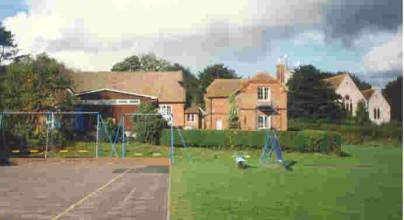
Temple Ewell CofE Primary School
Aside from the obvious ‘how could it all go so wrong’ thoughts, this report got me thinking back to my childhood and my schooling. I attended a traditional primary school: Temple Ewell Church of England Primary School. This was actually in the next village to the one where I lived – Whitfield – as we didn’t have a primary school then, although one was built some years later. The school had around 140 pupils and catered for ages 5 to 11, so we didn’t suffer from huge class sizes, as has become the norm more recently. Each year had a class teacher, who taught all subjects, and took a real interest in every child. My ex-wife works in a school and I know that teaching staff today are equally dedicated and that model still remains, by and large, but there was something different about it in 1958, when I started. But was this that the school itself was so different, or is it (more likely) that our lives have changed so much since then? I have memories of the early years at school when, if the teacher had to leave the room, we were made to cross our arms across our desk and rest our head on them, in total silence. Does that still happen? Could it? We were required to learn our ‘times tables’ by rote – I don’t know if this is still done but suspect that, from the OECD’s findings, this has been lost. Should it matter that I can instantly tell you what 8 times 9 is, or 11 times 11? I think it should, as the use of numbers underpins so much of what we do in everyday life, not just in education. For example, a good grasp of mental arithmetic is useful in comparing the value of pack sizes when you are shopping. Likewise, a good understanding of our own language is vital in so many ways, not least in our ability to enjoy the written word in all its forms. The only homework I can ever recall being given at primary school was reading, such was the importance placed on it. This continues, but it seems that somewhere along the way the ability to learn from this has become lost. And don’t get me started on secondary education! I went to Dover Grammar School for Boys, which still exists despite the ravages of various governments, and am eternally grateful for the depth and breadth of education it gave me.
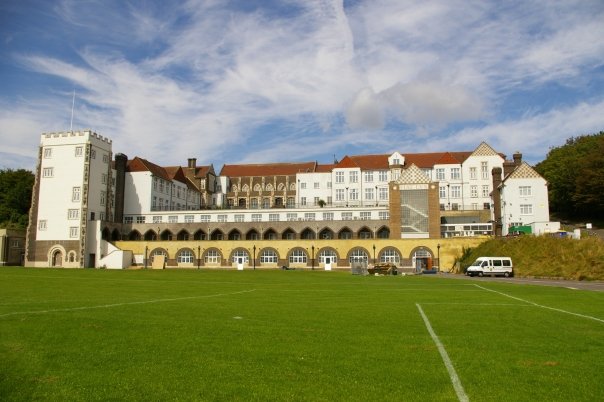
Dover Grammar School for Boys
This feeling of nostalgia isn’t just for my schooldays. Our whole lifestyle was so different back then. Technology hadn’t taken over our lives in the way it has now: my parents first acquired a TV set in early 1959, when I was 5, and we had the choice of 2 channels, in black and white, and broadcasting for a short while around lunchtime and from around 5pm to 11pm in the evening, except at weekends when we could watch a variety of sports all Saturday afternoon. National radio was equally limited, and the only commercial radio of note, before the pirate stations, was dear old Radio Luxembourg, which sounded like it was being broadcast from the North Pole in the middle of a hurricane. Or maybe that was just our radio? We didn’t have a telephone for a number of years, and even then it had to be on a line shared with a neighbour, as the local telephone exchange couldn’t cope with the demand. Convenience foods didn’t really take off until the 1960s when we were given all sorts of new treats to try: does anyone remember the introduction of packets of dried peas, which you poured into boiling water to resuscitate them? They were branded ‘Surprise,’ leading to the obvious schoolchildren’s joke: ‘What do you get with Surprise Peas? Wet legs.’ There are many more examples, both of inventions in food preparation and weak jokes, but I won’t go on. Maybe I’ll do another post some time – there is enough material for a series on this!
Don’t get me wrong, I absolutely love the way that technology in all fields has enhanced our lives. I own a fair range of gadgets, both for entertainment and for domestic use, and wouldn’t be without them. And I know that I’m putting on rose-tinted specs to look back to a time which had many things wrong with it, particularly in terms of social inequality. But the more I see reports like the OECD’s the more I think about what we have lost. It is difficult to make a fair comparison between the 5 year old me that first went to school and today’s wizened 62 year old cynic, but I view those days as representing a much more innocent age. I was quite typical of my time, in that I was less wise to the world at 13 than most of today’s 5 year olds seem to be, and it isn’t too melodramatic (I think) to say that I grieve for this, in a way. Is that stupid? Shouldn’t I accept that times change and that we move with them? Probably, but it doesn’t stop me looking back at my younger self and wishing that the world could still have some of the things it had then.
Even nostalgia isn’t what it used to be!
{PS The title for this is borrowed from a hit song from 1960, thus proving that there’s nothing new in looking wistfully back!}
{PPS 8 x 9 = 72, 11 x 11 = 121, in case you were wondering…..}

