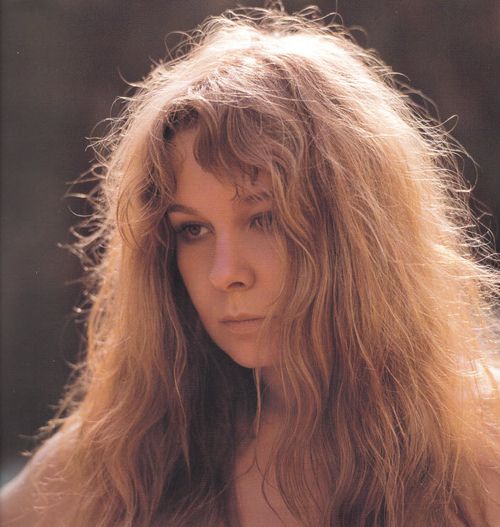
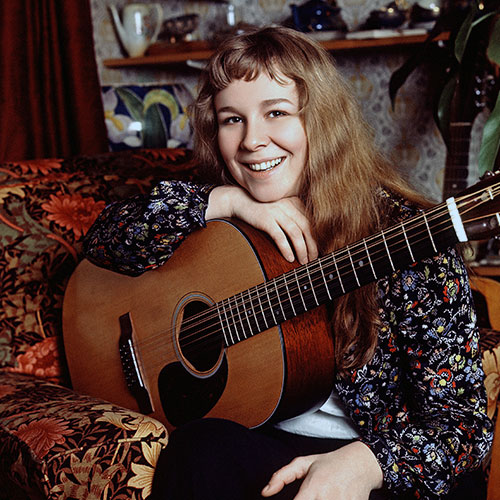
It has been three months since the most recent in my occasional Listen To The Band series, so it feels about time for another. For newbies, these are posts in which I take a longer look at the music of someone I’ve liked for ages, with a few more songs than in my regular posts. This makes them a bit longer, but you can always go round more than once to take it all in! Despite the name, I have also featured solo artists – three of them, in fact – and this one makes four. I have played a number of songs by today’s subject, most recently in last week’s The Story Of Tam Lin, and every time I do I remark on the beauty of her voice, so she is for me a worthy subject. Today I give you some of the wonderful music of Sandy Denny.
Alexandra Elene MacLean Denny was born on 6 January 1947, and took an early interest in music from the influence of her paternal grandparents. After school she started to train as a nurse, then transferred to art college, and finally devoted herself to music, which had been a side interest for her throughout those abortive careers. She recorded some very early albums, notably with The Strawbs, before joining Fairport Convention in May 1968. The band released three albums with her in 1969, and another in 1975 after she had rejoined, and I’m starting with the opening track of the first of those:
That was Fotheringay, from the album What We Did On Our Holidays, which was released in January 1969. The song tells the story of the imprisonment of Mary, Queen of Scots at Fotheringay Castle in Northamptonshire, prior to her execution there, and the video which I found includes some of the scenes from a movie called, rather obviously, Mary Queen Of Scots, which came out in 1971, starring Vanessa Redgrave as Mary and Glenda Jackson as Elizabeth I. The music is poignant, and I think they missed a trick in not including it on the movie soundtrack.
The second album the band released that year was Unhalfbricking, which came out in July 1969. It was their first record to make the UK Albums chart, where it peaked at #12, no doubt on the back of their unlikely hit single, which made #21 here:
Si Tu Dois Partir was, of course, Bob Dylan’s song If You Gotta Go, Go Now, with a slight difference. The French lyrics were created during the interval of a performance at the Middle Earth Club in London. According to guitarist Simon Nicol: “I think the boredom factor was one of the reasons we came up with this wacky idea. Three or four punters joined us in the dressing room; they were either French visitors or students of French working in London, and happened to be there that night.”. The crashing sounds part way through were the result of a milk bottle being dropped, and the producer, Joe Boyd, said that they kept them in because they were in perfect time with the music. Out of that a hit song was born.
The other song from that album I’m playing today has become a standard of the folk music genre. Sandy wrote it and originally recorded it in 1967 with The Strawbs, for an album which didn’t actually come out until 1973. The American singer Judy Collins had heard one of the demo tapes, recorded the song and made it the title track of an album she released in November 1968, which made #29 in the US and gave Sandy some publicity. Great singer though Judy Collins may be, but I don’t think anyone has ever done Sandy’s signature song better than she did:
Who Knows Where The Time Goes? has been recorded by many others, and it was the last song Sandy played in what turned out to be her final concert.
The final album Fairport released in that productive year was their milestone effort, Liege And Lief, which came out in December 1969 and peaked at #17 in the UK Albums chart. It has been credited as being the album which really started the UK folk-rock movement, and has been voted as the best folk album of all time by BBC listeners. The whole album is a gem, and I could easily have played it all – apart from the instrumentals. Probably the obvious one to go for would have been the eight minute epic Matty Groves, or perhaps the other epic Tam Lin, but I played that one last week. In any event, I think the album’s closing track may be a better tribute to Sandy’s beautiful voice:
Crazy Man Michael was written by Richard Thompson, with music by Dave Swarbrick. The meaning of the song is a little unclear, but is thought to be a response to the road accident shortly after the release of Unhalfbricking which killed the band’s drummer, Martin Lamble, and Richard Thompson’s girlfriend, Jeannie Franklyn. The crazed protagonist of the song, destined to wander the world with guilt for accidentally killing his true love, has been linked to that event by RT himself.
After leaving Fairport Convention Sandy was a founder member of the short-lived band Fotheringay – spot where the name came from! They only released one album during her lifetime but a second was compiled in 2008 from tracks they had recorded but not released. This is the opening track from the first album, released in 1970 and simply titled Fotheringay, and it is another piece of musical beauty:
As well as having a beautiful voice she wrote some lovely songs, like this one. The album got to #18 in the UK Albums chart.
As a side project, a gaggle of the English folk-rock musicians of the time got together and made an album of covers of the songs they loved while growing up. They called themselves The Bunch, and released an album titled Rock On in April 1972. It didn’t make the charts but I bought it with my summer holiday job earnings that year, and played it to bits. This is one where Sandy is on lead vocal, which she shares with the then Linda Peters, who went on to become Linda Thompson when she married Richard:
When Will I Be Loved was written by Phil Everly, and the Everly Brothers had a top ten US hit with it in 1960. Linda Ronstadt also had a US hit with it, getting to #2 in 1975. In between there was this version, which I’ve always liked.
Sandy released four solo albums between 1971 and 1977, and I’m rounding this piece off with three songs from those. Firstly, one from the second of those albums, Sandy, released in September 1972 and added to my collection just as I was going to uni. Listen Listen was released as a single but didn’t make the charts, despite being chosen by Tony Blackburn as his record of the week for his Radio 1 show! In my view it was too good for pop music buyers anyway:
Her next album was Like An Old Fashioned Waltz, which was released in June 1974. This is its opening track, which is probably my favourite of all of her solo songs, fitting its title:
The album was recorded in summer 1973, but by the time it was released in June 1974 Sandy had married her long time boyfriend, Trevor Lucas, and with him had rejoined Fairport Convention, so she didn’t really promote it. Some of the songs, including Solo, were included in Fairport’s setlists, but that was about all. That’s a shame to me, as it is a lovely album and this song in particular deserved more. Richard Thompson had left the band by then, but often played on his friends’ records – that’s him on lead guitar here.
I’ve probably already outstayed my welcome, but this final song for today is the closing track on the last album that was released in Sandy’s lifetime:
No More Sad Refrains is yet another example of Sandy’s exquisite songwriting. The message of the final verse is sadly prophetic:
I’ll be smiling all the time at everybodyMy friends will tell me I’m just not the sameI won’t linger over any tragedies that wereAnd I won’t be singing any more sad refrains
The album, Rendezvous, was released in May 1977, but tragically within a year Sandy had left us. She died on 21 April 1978 at the age of just 31, as the result of complications after a fall down the stairs in her home. She left behind Trevor, who also died early – in February 1989, aged 45, from a heart attack in his sleep. Their daughter, Georgia, was born in August 1977 and does a sterling job keeping their memory alive on a Facebook page I follow. Music as beautiful as this deserves not to be forgotten.