
I thought at first that Jim seemed to be in gruesome mode this week, as his Song Lyric Sunday invitation is to play a song that mentions death, kill or murder. Keeping it cheerful in the season of goodwill! But his post tells more: tomorrow is the 45th anniversary of John Lennon’s murder, so the theme is in tribute to him. As I have mentioned – and demonstrated – on many occasions I love folk music and the traditions it represents, so this seemed an obvious place for me to look for this theme. I recalled three that I especially like, and in my usual indecisive manner have chosen to play them all for you. The first two are about the impact of death on those loved ones who are left behind, while the third is the more gruesome one – just the two murders!
I’m leading with a song that showcases one of the most beautiful voices ever to come out of these shores, and for once that isn’t Sandy Denny! Treat your ears to the incredible Jacqui McShee:
The lyrics were on the video, but in case you missed any of them as they told their sad tale here they are in full:
The trees they grow high, the leaves they do grow green
Many is the time my true love I’ve seen
Many an hour I have watched him all alone
He’s young, but he’s daily growing
Father, dear father, you’ve done me great wrong
You have married me to a boy who is too young
I’m twice twelve and he is but fourteen
He’s young, but he’s daily growing
Daughter, dear daughter, I’ve done you no wrong
I have married you to a great lord’s son
He’ll be a man to you when I am dead and gone
He’s young, but he’s daily growing
Father, dear father, if you see fit
We’ll send him to college for another year yet
I’ll tie blue ribbons all around his head
To let the maidens know that he’s married
One day I was looking o’er my father’s castle wall
I spied all the boys a-playing at the ball
My own true love was the flower of them all
He’s young, but he’s daily growing
At the age of fourteen, he was a married man
At the age of fifteen, the father of a son
At the age of sixteen, his grave it was green
Cruel death had put an end to his growing
I’ll buy my love some flannel and I will make a shroud
With every stitch I put in it, the tears they will pour down
With every stitch I put in it, how the tears will flow
Cruel fate has put an end to his growing
No credits, as the song is traditional and has been handed down through the centuries. These verses are an approximation of the version sung here by Pentangle, although you will also find variations in other recordings.
As you may have seen right at the beginning of the video, Pentangle recorded The Trees They Do Grow High for their second album, Sweet Child, which was released in November 1968. It was a double album, with one disc that had been recorded the previous June at the Royal Festival Hall in London and a set of studio recordings, of which this song was one. The timing of the release was perfect for me, as it meant that I could ask for it as a Christmas present, and Mum and Dad duly obliged. We played it on Boxing Day, in full, and it was a big hit with them too. Even my sister seemed to like it, which was unusual for her!
The songs are the most wide-ranging of Pentangle’s albums, including folk songs, jazz classics, blues, early music and some of their own compositions. The album cover was designed by Peter Blake, better-known for his design of The Beatles’ Sgt. Pepper’s Lonely Hearts Club Band album. It didn’t make the charts, though critics have rated it the band’s best album, and for once I agree with them. It is a fabulous collection of 22 songs, and the title track in particular is incredibly good.
I finally managed to fulfil a bucket list wish and saw them play live in August 2011, at the very same location as on this album, the Royal Festival Hall. This was part of a reunion/farewell tour of the five original band members – Jacqui McShee, Bert Jansch, John Renbourn, Danny Thompson and Terry Cox – and it was a wonderful evening. There were a couple of times when I thought that Bert didn’t look well and sadly I was right – he passed away just two months later after a long battle with lung cancer. It was very poignant for me that the first time I got to see them was his final public performance. Following the recent passing of Danny Thompson, the bass player, only two of this lineup are still with us – vocalist Jacqui, who is 81, and drummer Terry, who is 88.
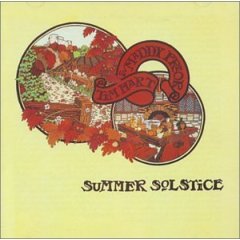
My second song for today also features someone who is no longer with us. This is a track by Tim Hart and Maddy Prior, founder members of Steeleye Span, who also recorded three albums as a duo. This is a track from the third of them, Summer Solstice, released in 1971:
Dancing At Whitsun was written by Austin John Marshall and The Copper Family. Marshall was an English record producer, songwriter, poet and graphic designer, most notable for his work in developing folk music in Britain in the 1960s and 1970s. The Copper Family are a family of singers of traditional, unaccompanied English folk song from Rottingdean, near Brighton. The family first came to the attention of folklorists in the late nineteenth century and received wider attention during the folk revival of the 1960s. This is a beautiful little song about the tributes paid by the widows of those who have lost their lives in battle, and paints a lovely picture of them dancing with their memories. I bought the album at the time and played it to bits – it is still a favourite of mine. Maddy is still going strong but sadly Tim passed away on Christmas Eve 2009, another lung cancer victim.

I promised you some gore, didn’t I, and this is it. I’ve just played something by two Steeleye Span members, and here are the other mainstays of the English folk rock scene that developed in the late 1960s, with an epic which is still a big part of their live shows to this day:
That was Fairport Convention, with Matty Groves, a track from their seminal album Liege & Lief, released in December 1969 – their third record of that year. This is widely regarded as the album which started the folk rock genre here, and has been voted the best folk album of all time in a poll by the BBC. The song is another traditional one: Matty Groves, also known as Little Musgrave and Lady Barnard or Little Musgrave, is a ballad probably originating in Northern England that describes an adulterous tryst between a young man and a noblewoman that is ended when the woman’s husband discovers and kills them. It is listed as Child Ballad #81 and #52 in the Roud Folk Song Index. It dates back to at least 1613, and under the title Little Musgrave and Lady Barnard is one of the Child Ballads collected by 19th-century American scholar Francis James Child. For the record, Liege & Lief peaked at #17 in the UK Albums Chart, and has gone Gold for more than 100k sales.
Somehow I have managed to combine all three of my early folk music influences into one post, with three of my favourite singers (though Maddy was only heard in the background) and I hope you’ve enjoyed them. Given the theme for today I hope you aren’t too depressed – two beautiful songs of memories and a cracker of a revenge tale have, I think, prevented that! Thanks as always to Jim for running the show and providing an appropriate prompt for a sad anniversary, though I’m happy to say that next week will see us on more positive ground!
See you again for Tuesday Tunes aka Advent Countdown, I trust 😊

