
After Stevie kindly referenced me in her post last week, about the ways that the same words can mean very different things to people using English as it was originally intended or US English, I thought I’d return the favour – note the ‘u,’ America!
A couple of days after she posted I was struck by a clue in the Times crossword, which I’m showing you here. It’s 27 across: 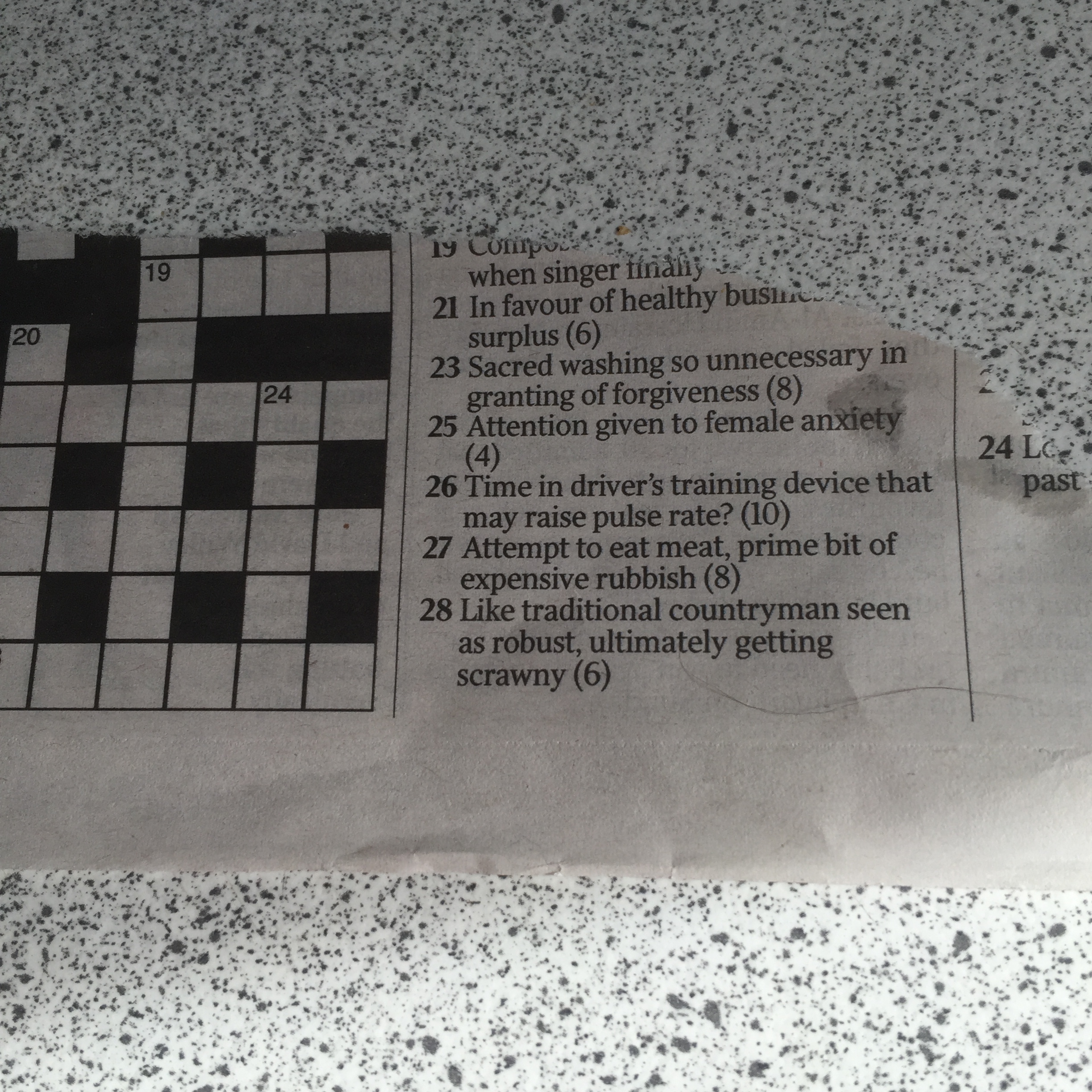
If you don’t have the kind of warped mind needed to solve crosswords, let me deconstruct it for you. For ‘attempt’ the synonym is ‘try.’ The meat is ‘rump’ and the prime, i.e. first part of ‘expensive’ is ‘e.’ With me so far? Use of the word ‘eat’ often means that one word takes another into it, so the solution is:
T(RUMP)-E-RY.
Trumpery? Americans in particular could be forgiven for believing this to be a made up 21st century word, but it isn’t. In fact, it goes back hundreds of years to Medieval English, as this extract from the Oxford Dictionary Online shows:
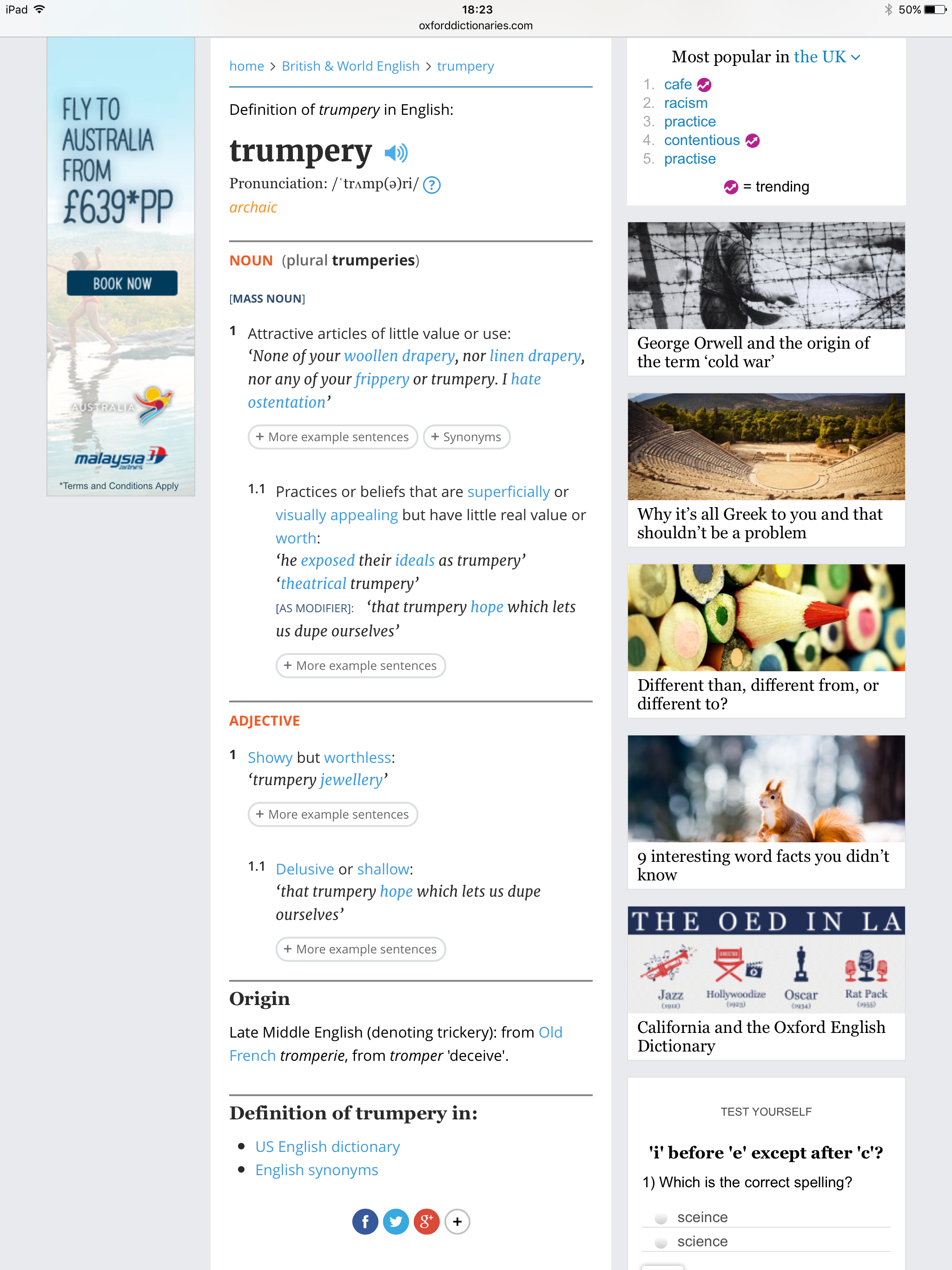
So ‘trumpery’ can mean trickery, articles of little value or use, practices or beliefs that are superficially appealing but have little real value or worth, showy but worthless, delusive or shallow. It’s quite a good word, really, isn’t it? Could we bring it back in modern day usage? Would it have any relevance or meaning today? You might think that….I couldn’t possibly comment 😉
 Take It Easy